AI Model Monitoring in CRM: How to Detect When Automated Decisions Start Losing Accuracy
An AI model can be accurate at launch and become less useful later as customer behavior, products, processes, data capture, and employee responses change.

Independent articles, guides, and insights covering CRM, artificial intelligence, automation, and modern customer relationships.

A CRM becomes valuable when it helps people understand context, choose the next action, and coordinate work across teams. Features matter, but clarity, consistency, and trust determine whether…

An AI model can be accurate at launch and become less useful later as customer behavior, products, processes, data capture, and employee responses change.

A useful CRM summary reduces reading time without erasing the evidence, chronology, or uncertainty that people need to make responsible customer decisions.

Opportunity scoring is most useful as a prioritization signal that helps salespeople investigate, not as a hidden probability that replaces deal judgment.

A churn score has little value unless the business knows why the risk matters, what action is appropriate, and whether intervention changes the outcome.
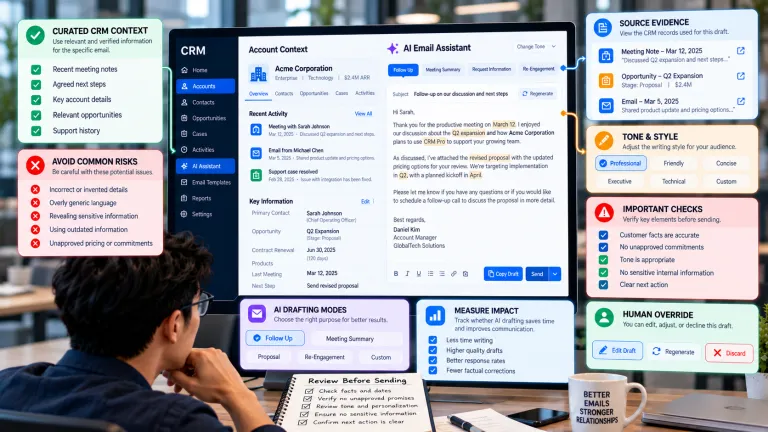
AI can reduce the effort of drafting customer emails, but efficiency disappears if employees spend equal time correcting generic tone, unsupported claims, and inappropriate personalization.
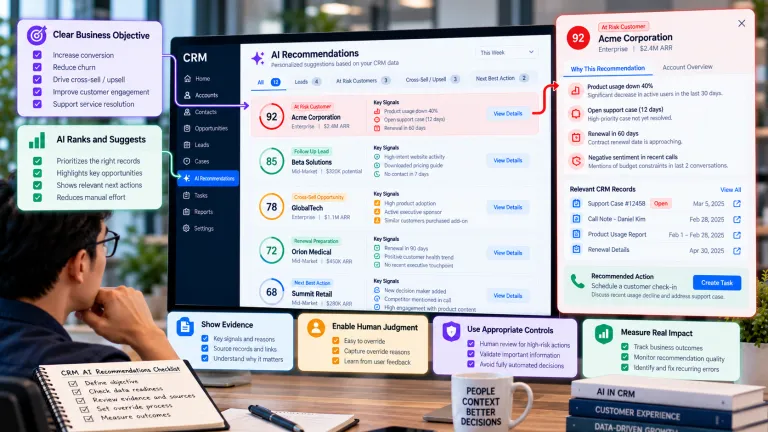
A useful CRM recommendation narrows attention and explains its evidence; it should not turn a probabilistic suggestion into a command that users are discouraged from questioning.
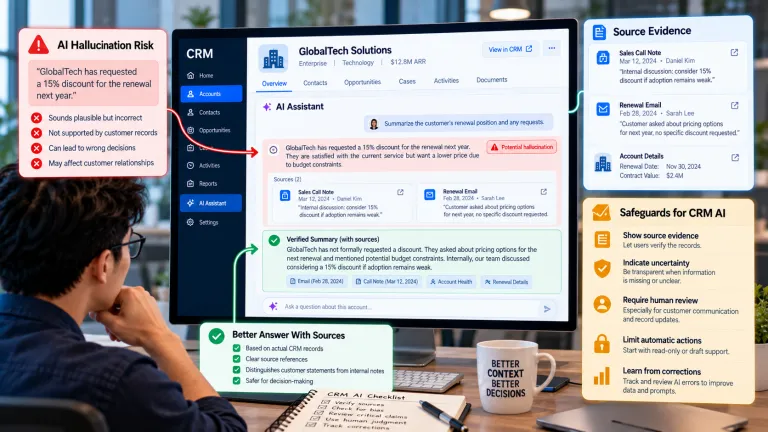
A fluent CRM assistant can sound confident even when it invents facts, merges context incorrectly, or fills gaps with plausible language.
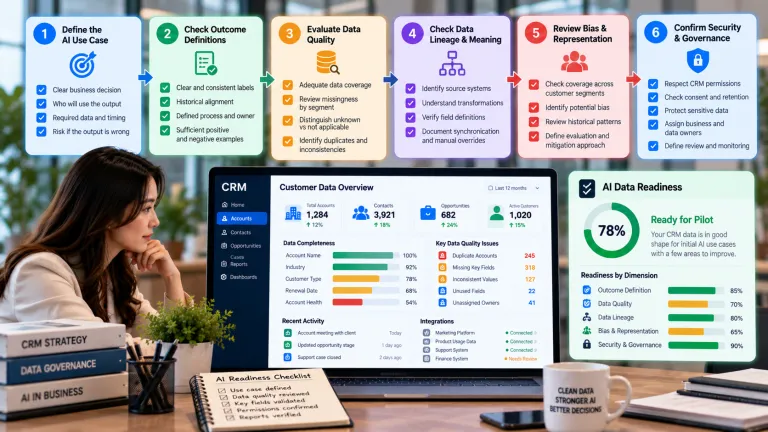
AI readiness is not a score based on how much customer data a company owns; it depends on whether the right data is reliable, lawful, understandable, and connected to a specific use case.
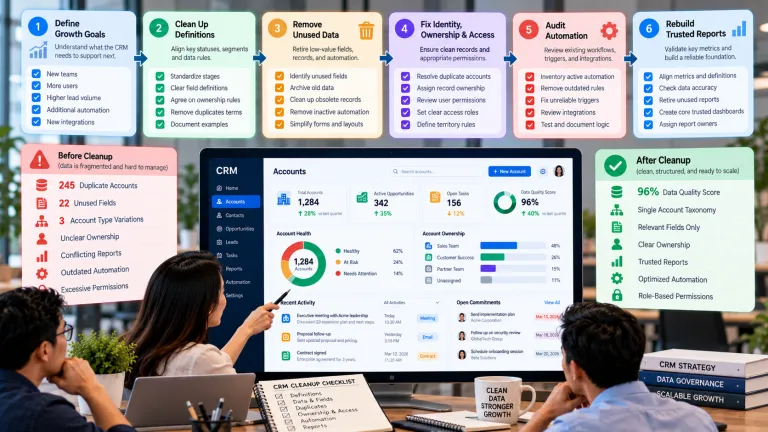
Growth amplifies whatever already exists in a CRM, including unclear definitions, duplicate data, broken ownership, and fragile automation.
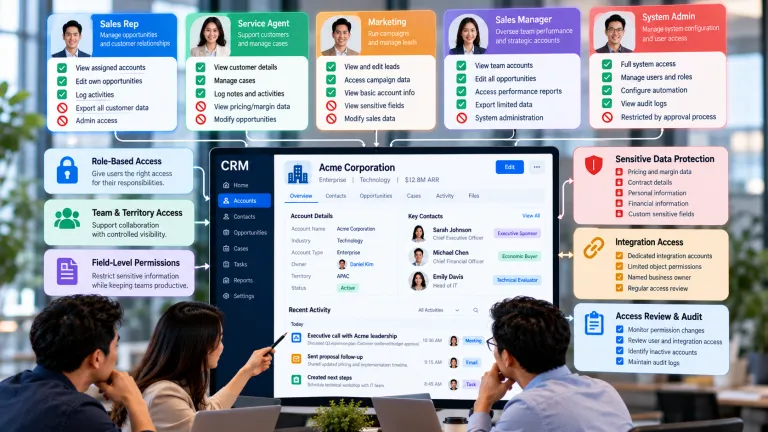
The goal of CRM access control is not maximum restriction; it is giving people enough information to do their jobs while reducing unnecessary exposure and risky actions.
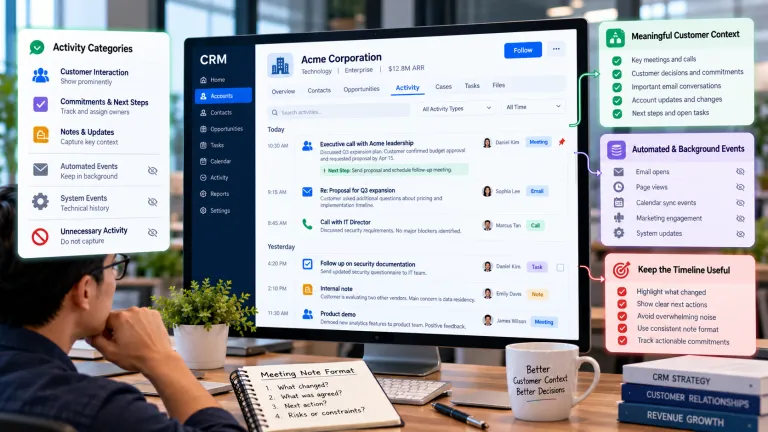
Activity tracking is useful when it preserves context and commitments; recording every possible interaction can make the important signals harder to find.
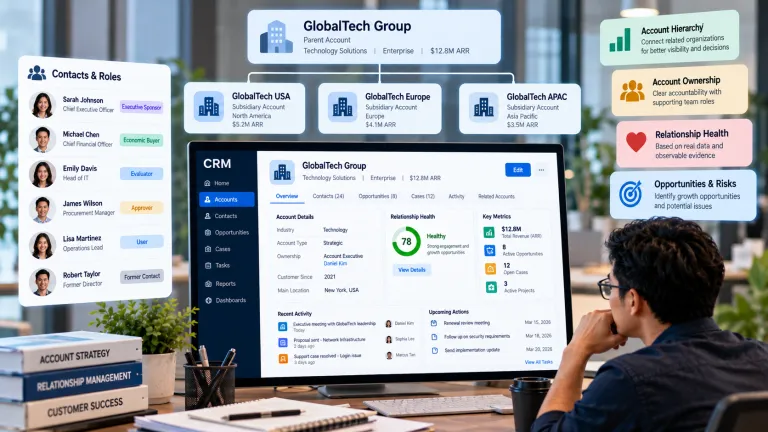
Strong account management connects people to the organizations, roles, opportunities, service history, and relationships that give individual contacts meaning.