Sales Handoff in CRM: How to Prevent Leads From Falling Between Teams
A handoff fails when responsibility changes without transferring enough context, evidence, or accountability for the next action.

Independent articles, guides, and insights covering CRM, artificial intelligence, automation, and modern customer relationships.

A CRM becomes valuable when it helps people understand context, choose the next action, and coordinate work across teams. Features matter, but clarity, consistency, and trust determine whether…
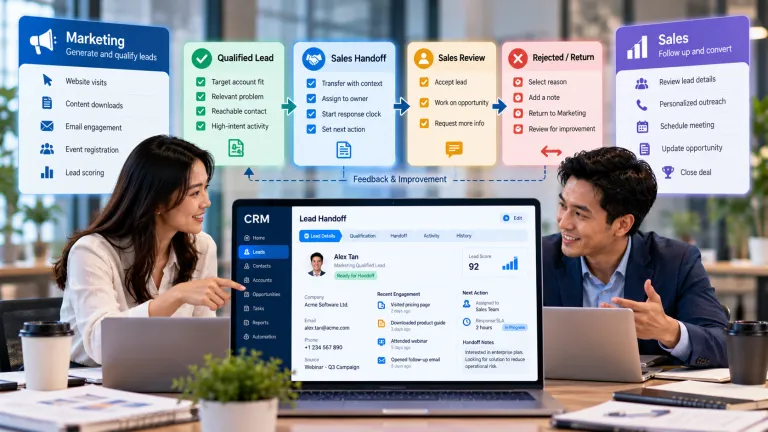
A handoff fails when responsibility changes without transferring enough context, evidence, or accountability for the next action.
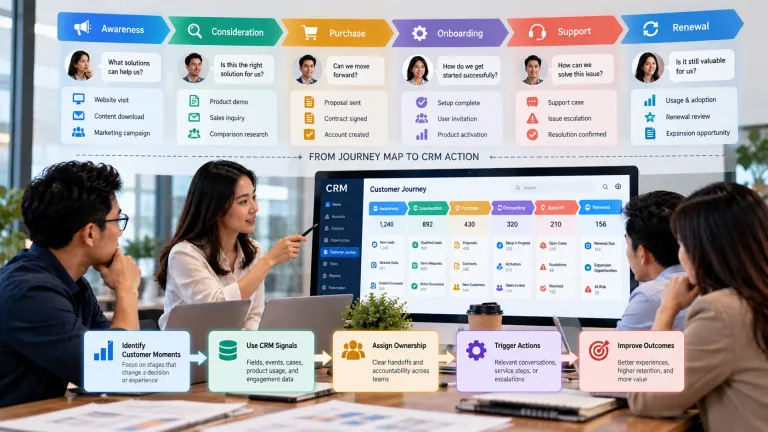
A journey map becomes operational when CRM data can recognize important moments, assign ownership, and help teams choose the next action.
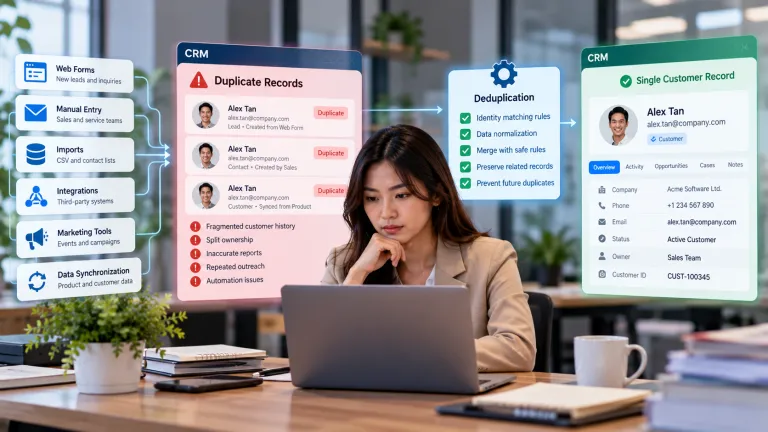
Duplicate records are rarely just a cleanup problem; they are evidence that identity, entry rules, integrations, or ownership need attention.

CRM software can be technically capable and still underperform when process, ownership, data, and adoption are treated as secondary concerns.

Every CRM field creates a long-term cost in user attention, data quality, reporting, and maintenance, so each one should earn its place.

A useful CRM requirements document describes how the business needs to work, not merely which software features people would like to have.
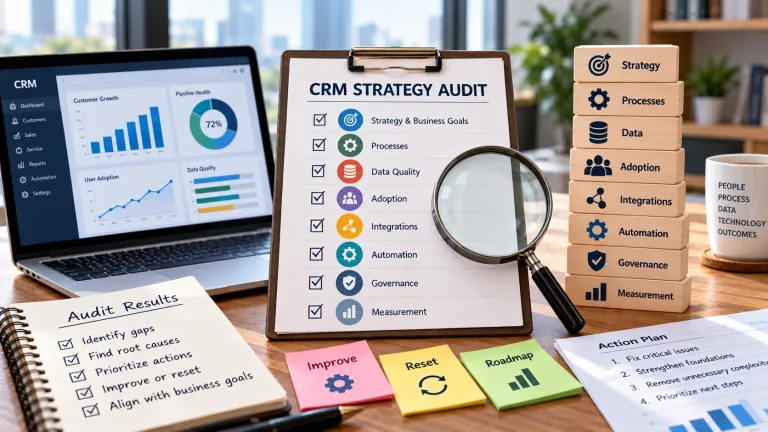
A practical CRM strategy audit for identifying broken processes, unreliable data, low adoption, governance gaps, and deciding whether your CRM needs refinement or a deeper reset.
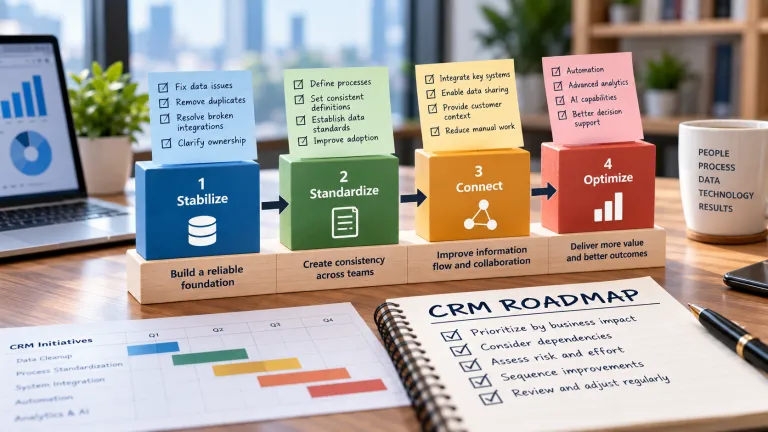
A practical framework for prioritizing CRM improvements based on business impact, dependencies, risk, effort, and organizational readiness.
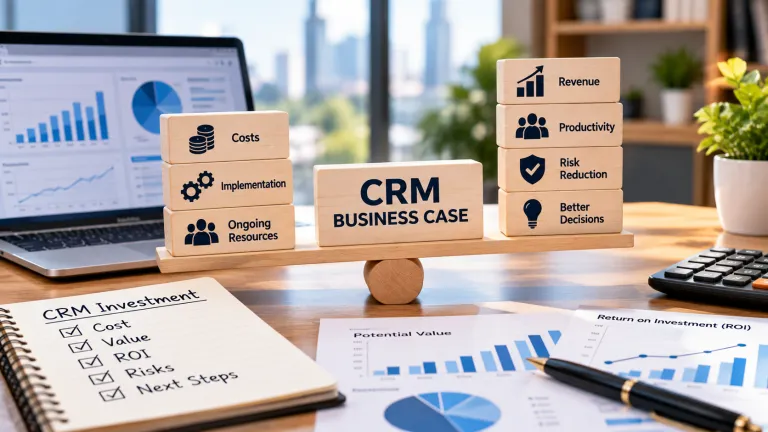
A practical guide to building a CRM business case that connects investment, operational costs, measurable value, risk, adoption, and long-term business outcomes.
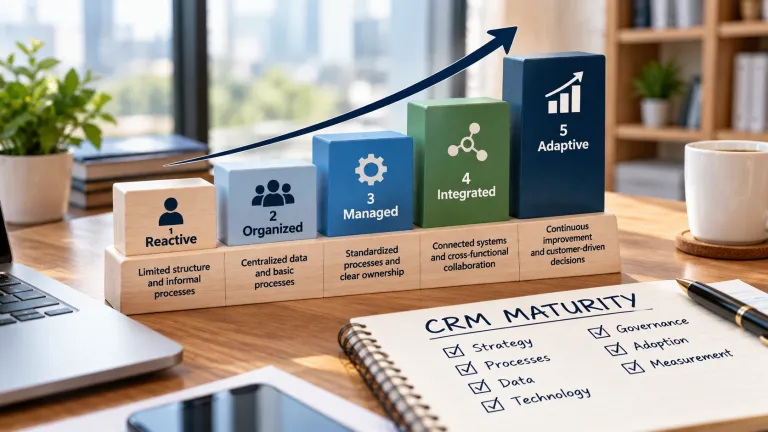
A practical CRM maturity model for assessing strategy, customer processes, data, technology, governance, adoption, and measurement before planning your next CRM investment.
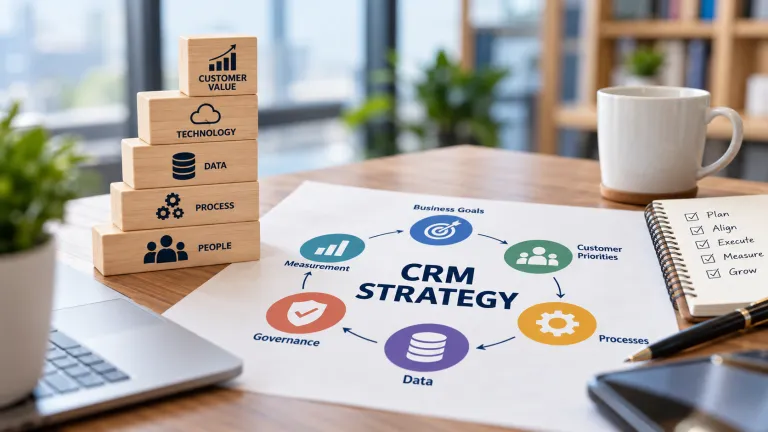
A practical CRM strategy framework for connecting business goals with customer priorities, operational decisions, technology, governance, and measurable outcomes.

Many organizations buy a CRM expecting the software to solve a process problem. The better approach is to begin with the customer outcome, define the decisions employees must make, and then configure technology around that operating.