Predictive Analytics in CRM: How AI Helps Understand Customers
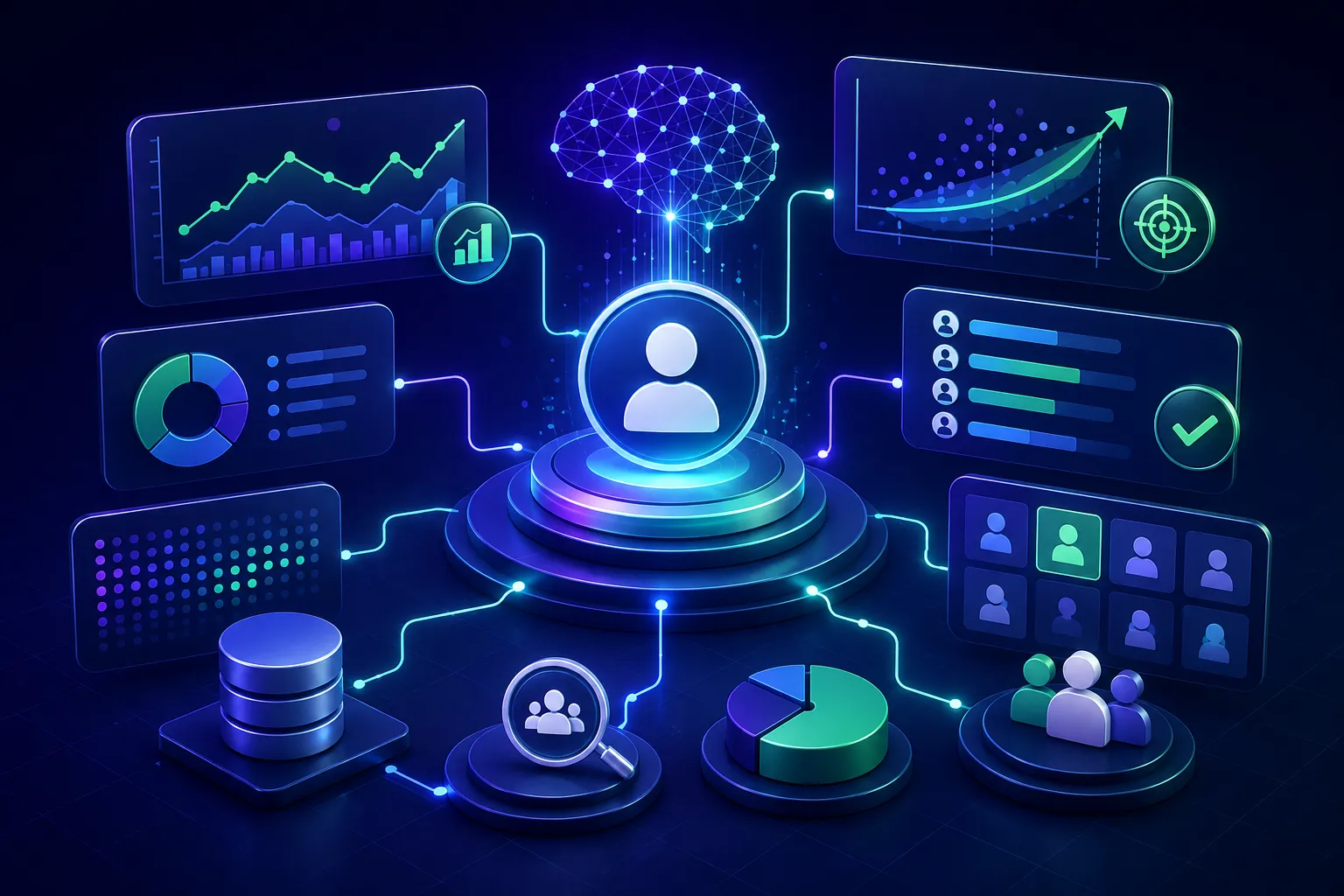
Predictive analytics is changing how organizations use Customer Relationship Management (CRM) data to understand customers. Traditional CRM systems are often used to record customer information, interactions, sales activities, and service history. Predictive analytics adds another layer by analyzing existing information to identify patterns that may indicate what could happen next. Instead of looking only at what a customer has already done, organizations can use predictive methods to explore possible future behavior and make more informed decisions.
Artificial Intelligence (AI) plays an important role in this process because customer data can be too large or complex to analyze manually. AI can examine patterns across customer records, interactions, behaviors, and other signals to identify relationships that may not be immediately visible. In a CRM environment, these capabilities can support activities such as identifying potential customers, recognizing changes in engagement, prioritizing follow-up, and understanding which relationships may require additional attention.
What Is Predictive Analytics in CRM?
Predictive analytics in CRM refers to the use of historical and current customer information to identify patterns that may help estimate future outcomes. Rather than simply reporting what has already happened, predictive analytics asks a different question: based on the information available, what might happen next?
For example, a CRM may contain information about customer interactions, purchase history, service activity, communication patterns, and engagement. Predictive analysis can examine these signals to identify customers who may be more likely to respond to a particular type of communication, require additional support, or become less engaged over time.
The output is not a guaranteed prediction of the future. It is better understood as a signal or probability that can help employees decide where to investigate further or where additional attention may be useful.
Why Predictive Analytics Matters for Customer Relationships
Customer relationships are constantly changing. A customer who was highly engaged several months ago may become less active, while another customer may suddenly show stronger interest in an organization. If employees only review information after an important event has already happened, opportunities to respond earlier may be missed.
Predictive analytics can help organizations move from a purely reactive approach toward a more proactive one. Instead of waiting for a customer to stop engaging or submit a complaint, an organization may use available signals to identify changes in behavior and investigate whether action is appropriate.
This builds on the broader purpose of CRM. As explained in why CRM matters for modern business, customer information becomes more useful when organizations can turn it into context that supports communication, coordination, and better decisions.
How AI Supports Predictive Analytics
Predictive analytics can involve statistical methods, but AI can make the process more flexible when large amounts of customer information are involved. AI systems can process patterns across different types of data and help identify relationships between customer characteristics, behaviors, and outcomes.
For example, an organization may want to understand which combinations of customer activities are associated with higher engagement. AI can analyze historical records and identify patterns that employees may not notice when reviewing individual accounts manually. These patterns can then become inputs for predictive models or decision-support tools.
The effectiveness of this process depends on the information being analyzed. AI cannot create reliable insight from poor-quality data. Inaccurate records, inconsistent categories, missing information, or duplicated customer profiles can reduce the usefulness of predictive analysis.
Common Predictive Analytics Use Cases in CRM
Lead Scoring and Opportunity Prioritization
One common use of predictive analytics is helping organizations prioritize potential customers. A CRM may contain information about how prospects interact with websites, emails, sales representatives, forms, or other channels. Predictive models can use historical patterns to identify prospects that may deserve greater attention.
This does not mean that the system automatically knows which prospect will become a customer. Instead, it can help sales teams organize their attention based on available signals. An employee may then investigate high-priority opportunities while still considering information that the model may not capture.
This can be especially useful when teams are managing large numbers of prospects. Rather than treating every record exactly the same, predictive analysis can provide another layer of context for deciding where follow-up may be most appropriate.
Customer Churn Prediction
Another widely discussed application is churn prediction. Churn generally refers to a customer becoming inactive or ending a relationship with an organization. Predictive analytics can examine changes in engagement, service activity, purchasing behavior, communication patterns, or other signals to identify relationships that may need attention.
For example, a customer who has become less active, stopped engaging with communications, and submitted several unresolved service requests may display a different pattern from an actively engaged customer. A predictive model may identify these combined signals as worthy of further investigation.
The important point is that a prediction should lead to investigation rather than automatic action. A decline in activity may have many possible explanations, and employees should consider the broader customer context before deciding how to respond.
Next-Best-Action Support
Predictive analytics can also support decisions about what an organization might do next. Based on historical patterns and available customer context, a system may suggest that a particular type of follow-up deserves consideration.
For example, one customer may be more likely to engage with educational information, while another may require direct service assistance. Predictive analysis can help surface these possibilities so employees do not have to rely entirely on assumptions or manual review.
Using Customer Behavior as a Predictive Signal
Customer behavior provides many of the signals used in predictive analytics. These signals can include frequency of interactions, response patterns, content engagement, purchases, service activity, website behavior, or changes in communication habits.
A single behavior may not be meaningful on its own. The value often comes from combinations of signals. For example, a customer who has always interacted infrequently may not require attention simply because activity is low. A sudden change from previously high engagement may be more meaningful.
This is where AI can provide additional value. Rather than asking employees to manually compare thousands of individual customer histories, AI can help identify patterns across larger datasets and highlight relationships that may deserve closer attention.
Predictive Analytics and Personalization
Predictive analytics can also support personalized customer experiences. When organizations understand which behaviors may indicate specific interests or needs, they can make communication more relevant.
For example, predictive analysis may identify that customers who follow a certain sequence of interactions tend to engage with a particular type of content. An organization could then use that insight to determine whether similar customers may benefit from related information.
This creates a natural connection between predictive analytics and AI-powered personalization in customer relationships. Predictive analysis can help identify likely preferences or outcomes, while personalization can use those insights to shape more relevant interactions.
Predictive Analytics and Customer Service
Predictive analytics can also support customer service by helping teams identify patterns in support activity. Organizations may analyze case history, request frequency, response times, escalation patterns, or other service-related information to identify situations that could require additional attention.
For example, repeated requests about a similar issue may indicate that a customer needs a more complete solution rather than another isolated response. At a broader level, recurring service patterns may suggest that documentation, communication, or internal processes need improvement.
This can complement the use of AI automation in customer service. While automation can help classify requests or assist with routine workflows, predictive analytics can help organizations identify broader patterns across those interactions.
The Importance of CRM Data Quality
Predictive analytics depends heavily on the quality of the CRM data being analyzed. If customer records are incomplete or inconsistent, the resulting predictions may be unreliable. This makes data quality one of the most important foundations for any predictive CRM strategy.
Organizations need clear processes for maintaining customer records, resolving duplicates, updating outdated information, and ensuring that important interactions are recorded consistently. The better the underlying data, the more useful the analytical environment becomes.
This is closely related to the structure of CRM itself. Understanding the key components of a CRM system helps explain why customer records, interaction history, analytics, automation, and data management need to work together.
Limitations and Risks of Predictive Analytics
Predictive analytics can provide useful signals, but it has important limitations. A prediction is based on patterns in available data, which means it may not account for unexpected events, changing customer circumstances, or factors that are not represented in the CRM.
Historical data can also contain bias. If past decisions or customer interactions reflected inconsistent treatment, a model trained on that information may reproduce those patterns. Organizations therefore need processes for evaluating predictive systems rather than assuming that model outputs are automatically correct.
Another risk is over-automation. Employees may be tempted to treat a prediction as a definitive answer, especially when the system presents a result with high confidence. Good CRM practice requires human judgment and context, particularly when predictions affect important customer decisions.
How Predictive Analytics Changes CRM Decision-Making
Traditional CRM reporting often helps organizations understand what has already happened. Predictive analytics extends this perspective by helping employees consider what might happen next and where attention may be useful.
This does not replace traditional reporting. Historical reports remain important because they provide the context needed to interpret predictive signals. In practice, the strongest CRM environments can combine descriptive information about the past with predictive analysis about possible future outcomes.
As AI capabilities continue to develop, this relationship between CRM data, analytics, and decision support is likely to become more integrated. AI is transforming CRM by helping organizations move from simple information storage toward systems that can interpret customer data and support more informed action.
Conclusion
Predictive analytics in CRM helps organizations use historical and current customer information to identify patterns that may indicate future behavior or outcomes. AI can support this process by analyzing larger amounts of information, identifying relationships between signals, and helping employees determine where further attention may be useful.
The value of predictive analytics does not come from predicting the future perfectly. Its real value comes from helping organizations recognize meaningful signals earlier, ask better questions, prioritize attention, and make decisions using more customer context.
When predictive analytics is combined with accurate CRM data, responsible human oversight, personalization, and appropriate workflows, it can become a useful part of modern customer relationship management. The result is a CRM environment that is not only able to record what happened, but also better equipped to explore what may happen next.