Why Does CRM Matter? Understanding Its Role in Modern Busines
Customer Relationship Management (CRM) matters because maintaining strong customer relationships has become more complex as businesses interact with people across multiple channels and touchpoints. Customers may communicate through websites, email, social media, messaging platforms, phone calls, and physical locations, creating a large amount of information that organizations need to understand. CRM provides a structured way to organize that information and use it to support more consistent communication, better customer experiences, and more informed business decisions.
Although CRM is often associated with sales software, its role extends far beyond tracking potential customers. CRM represents a broader approach to understanding customers, managing interactions, coordinating activities, and maintaining useful relationship history over time. When implemented effectively, CRM can connect different parts of an organization around a clearer understanding of the people they serve.
Why Customer Relationships Matter
Customer relationships influence more than individual transactions. They can affect trust, satisfaction, repeat interactions, recommendations, and the overall perception a customer has of an organization. When customers receive inconsistent information, have to repeat their concerns, or feel that previous interactions are forgotten, the relationship can become more difficult to maintain.
This becomes especially important as businesses grow. A small organization may be able to manage customer relationships through personal knowledge, spreadsheets, email conversations, and individual notes. As the number of customers and interactions increases, however, these approaches can become fragmented. Important details may be difficult to locate, different employees may have different versions of the same information, and opportunities for timely follow-up can easily be missed.
CRM matters because it provides a more systematic way to manage this growing complexity. Instead of treating every customer interaction as an isolated event, organizations can connect interactions and information into a broader picture of the relationship.
CRM Creates a More Complete View of Customers
One of the most important reasons CRM matters is its ability to bring customer information together. A customer may interact with an organization many times and through different channels. Without a structured system, each interaction may remain in a separate location, making it difficult for employees to understand the full context.
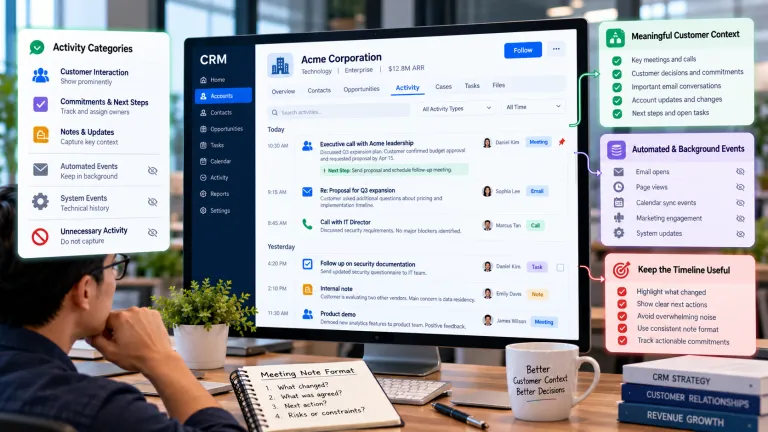
A CRM system can organize information such as customer profiles, communication history, service requests, sales activities, preferences, and other relevant records. This does not mean that every piece of information needs to be stored or used. Instead, the goal is to create a useful and consistent view of customer relationships so that employees have the context they need when interacting with customers.
For example, imagine a customer who has contacted a company several times about the same issue. If each employee sees only the latest message, the customer may need to explain the problem again. With a connected customer history, an employee can review previous interactions, understand what has already happened, and continue the conversation with greater context.
CRM Improves Communication and Coordination
Customer relationships are rarely managed by one person alone. Sales representatives, customer service teams, marketing professionals, account managers, and other departments may all interact with the same customers at different stages. Without coordination, customers can receive inconsistent messages or experience unnecessary delays.
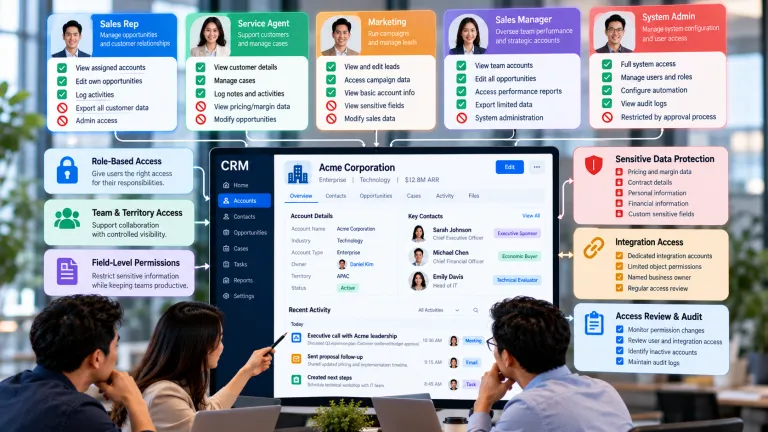
CRM helps create a shared information environment where authorized teams can access relevant customer context. This can make internal coordination easier because employees do not have to rely entirely on personal notes or informal communication. Instead, important information can be documented as part of the customer’s relationship history.
Better coordination can also help organizations maintain continuity when responsibilities change. If one employee is unavailable or a customer is transferred to another team, the next person can review the available history rather than starting from the beginning. This creates a smoother experience for both employees and customers.
CRM Supports Better Customer Experiences
Customer experience is influenced by many small interactions rather than one isolated event. A customer may judge an organization based on how easy it is to get information, how quickly a problem is addressed, whether previous conversations are remembered, and whether communication feels relevant to their situation.
CRM can support these experiences by making customer information more accessible and structured. When employees have the right context, they can respond more efficiently and avoid unnecessary repetition. This does not automatically create a great customer experience, but it gives employees a stronger foundation for providing one.
CRM can also help organizations identify recurring customer problems. If similar questions or service requests appear repeatedly, the organization may be able to improve documentation, communication, product information, or support processes. In this way, CRM can contribute not only to individual interactions but also to broader improvements in how customer experiences are designed.
CRM Helps Businesses Make Better Decisions
Another reason CRM matters is the role customer information can play in decision-making. Businesses need to understand patterns in customer activity, not just individual interactions. Without organized information, it can be difficult to identify trends or determine which areas deserve attention.
CRM systems can provide reports and analytics related to customer activities, sales processes, service requests, engagement, and other measures. These insights can help managers identify changes in customer behavior, monitor ongoing activities, and evaluate whether certain processes are working as expected.
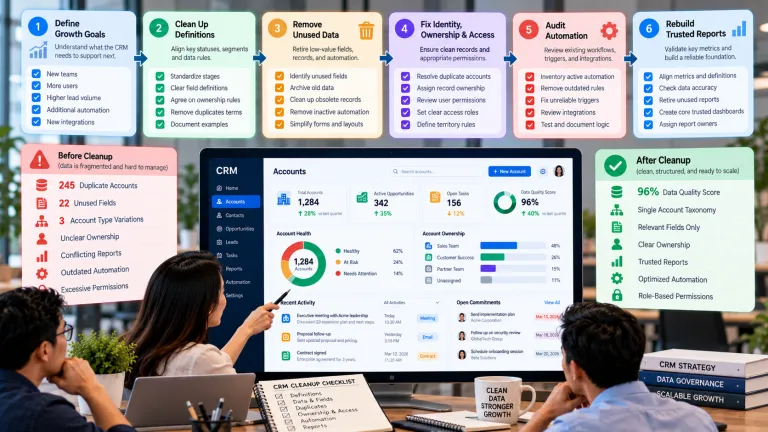
However, the value of CRM analytics depends on the quality of the underlying data. Incomplete records, inconsistent information, duplicate entries, or outdated customer details can reduce the usefulness of reports. CRM therefore matters not simply because it produces dashboards, but because it can create a more reliable information environment for decision-making when data is maintained properly.
CRM Can Improve Operational Efficiency
Managing customer relationships involves many repetitive administrative tasks. Employees may need to update records, schedule follow-ups, assign activities, document interactions, and search for information. When these tasks are performed manually across different tools, they can consume significant time and increase the risk of inconsistency.
CRM can help organize these activities within a more structured workflow. Depending on the system, organizations may also use automation for tasks such as reminders, record updates, notifications, or follow-up activities. This can reduce repetitive work and allow employees to spend more time on customer conversations and decisions that require human judgment.
Efficiency should not be confused with simply doing more tasks faster. A useful CRM process should also make work clearer and reduce unnecessary complexity. Poorly designed CRM workflows can create additional administrative burdens, so implementation and process design are just as important as the technology itself.
CRM Strengthens Customer Retention Efforts
Customer retention is closely connected to how well an organization understands and responds to its existing customers. Losing customers can sometimes happen because of obvious problems, but it can also result from a gradual decline in engagement, unresolved issues, poor communication, or a feeling that the relationship is no longer valuable.
CRM can help organizations monitor relevant customer activity and maintain a clearer history of interactions. This can make it easier to identify customers who may need follow-up, understand previous problems, and recognize opportunities to improve the relationship. The system does not guarantee retention, but it can provide information that helps employees respond before small issues become larger ones.
Over time, this can support a more proactive approach to customer relationships. Instead of waiting until a customer complains or leaves, organizations may be able to identify patterns and address concerns earlier.
CRM Connects Different Business Functions
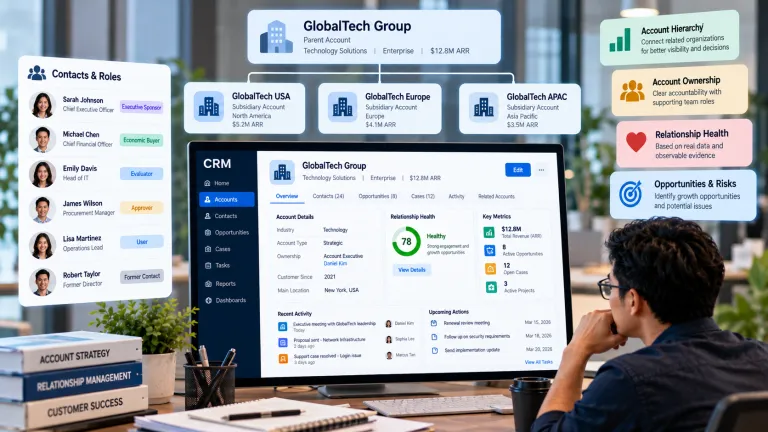
One of the deeper reasons CRM matters is that customer relationships often cross organizational boundaries. Marketing may generate interest, sales may develop opportunities, customer service may handle problems, and account teams may manage ongoing relationships. If these activities are disconnected, each department may have a different understanding of the same customer.
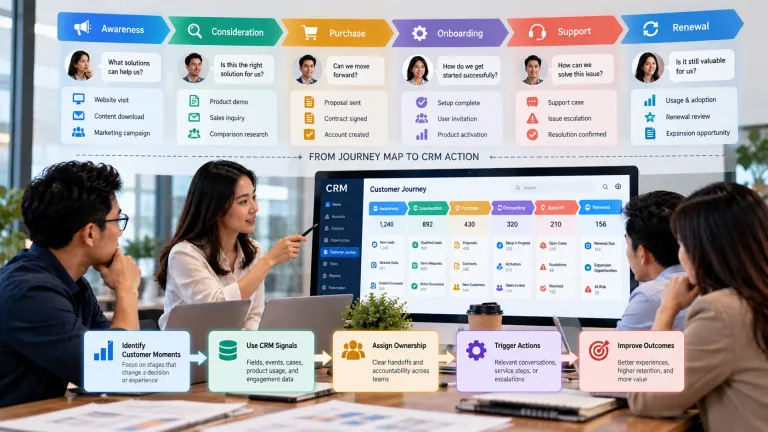
CRM can provide a common environment where relevant customer information is shared across functions. This can help teams understand what happened before and what needs to happen next. It also makes it easier to see the customer relationship as a continuous journey rather than a collection of separate departmental activities.
This broader perspective can improve alignment around customer needs. Instead of optimizing each department independently, organizations can use customer information to think about the entire relationship and how different teams contribute to it.
CRM Matters More as Businesses Become More Digital
Digital channels have increased both the number and complexity of customer interactions. Customers can research information independently, compare alternatives, contact businesses at different times, and switch between channels during the same interaction. This creates more customer data but also creates greater expectations for consistency and responsiveness.
CRM provides a framework for organizing this complexity. As businesses adopt more digital tools, the need to connect information across those tools can become more important. CRM can serve as a central relationship layer that helps organizations understand how different interactions contribute to the overall customer experience.
This also creates an important connection between CRM and emerging technologies such as artificial intelligence. Once customer information is structured and accessible, AI can help analyze patterns, summarize interactions, support personalization, and assist with repetitive workflows.
CRM Is More Than Software
It is easy to think of CRM as simply a category of business software, but that view misses an important part of its purpose. Technology can organize customer information, automate workflows, and generate reports, but successful customer relationship management also depends on processes, people, communication, data quality, and organizational culture.
A business can have an advanced CRM system and still provide a poor customer experience if employees are not trained, information is inaccurate, or processes are designed around internal convenience rather than customer needs. CRM works best when technology and organizational practices support the same goal: building more informed, consistent, and meaningful customer relationships.
Conclusion
CRM matters because customer relationships are becoming more complex, data-rich, and distributed across multiple channels. A structured CRM approach can help organizations organize customer information, coordinate communication, improve customer experiences, support decision-making, and reduce repetitive administrative work.
The most important value of CRM is not the software itself. It is the ability to create a more complete understanding of customer relationships and use that understanding to make better decisions and provide more consistent experiences. When data, processes, and people work together effectively, CRM becomes a foundation for long-term customer relationship management.
As technology continues to evolve, CRM is also becoming increasingly connected with artificial intelligence, automation, analytics, and other digital capabilities. Understanding why CRM matters provides a useful foundation for exploring how these technologies are changing the way organizations understand and engage with their customers.