AI Opportunity Scoring in CRM: How to Prioritize Deals Without Blindly Trusting the Model
Sales teams have always tried to distinguish promising opportunities from deals that are unlikely to progress. AI opportunity scoring can add pattern recognition across account characteristics, activities, stage history, product interest, and outcomes. The promise is faster prioritization. The danger is turning a model score into an authority users follow without understanding its evidence or limitations.
A practical scoring system should improve attention and decision quality while preserving accountability. It needs reliable historical outcomes, protection against data leakage, useful explanations, and a process for learning from the cases where experienced sellers disagree.
Key Takeaways
Scoring should support a defined sales decision such as prioritization, coaching, or forecast review.
Historical opportunity outcomes must be consistent enough to train and evaluate the model.
Signals available only late in the sales process can make early scores misleading or create leakage.
Users need evidence and an override path, especially for strategic or unusual deals.
Measure whether scoring improves attention, progression, forecast quality, or productivity rather than only model accuracy.
Clarify What the Score Means
A score could represent likelihood to close, likelihood to progress to the next stage, expected value, time to close, or another outcome. These are different questions. A large strategic opportunity may have a lower close probability but still deserve executive attention because its potential value is high.
Define the decision the score supports and avoid presenting one number as a complete statement about deal quality.
Audit Historical Opportunity Labels
If salespeople close opportunities differently, leave old deals open, or use stages inconsistently, the model learns those habits. Before training, review how won, lost, disqualified, and abandoned opportunities were recorded and whether definitions changed over time.
Historical data does not need to be flawless, but known inconsistencies should inform scope and evaluation. A model trained on one business unit may not transfer reliably to another with different sales processes.
Prevent Data Leakage
A model can appear extremely accurate if it uses signals that occur after the outcome is effectively known. A final contract-status field, late-stage approval, or activity generated by the closing process may reveal the answer rather than predict it.
Evaluate which fields are genuinely available at the moment the score will be used. Test performance at multiple sales stages instead of calculating one impressive metric from the full historical record.
Explain the Leading Signals
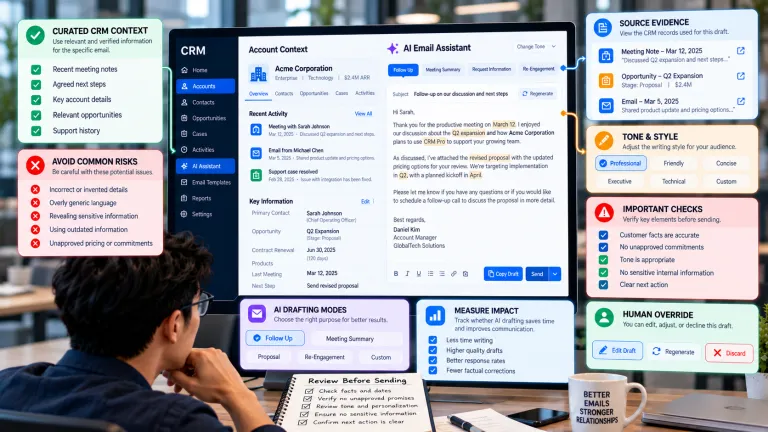
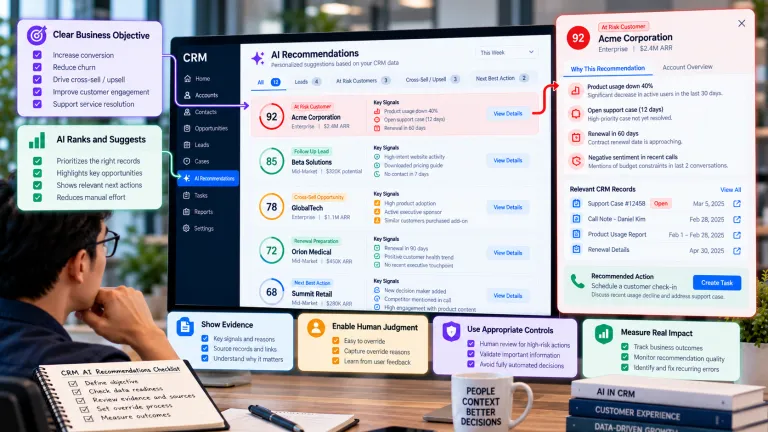
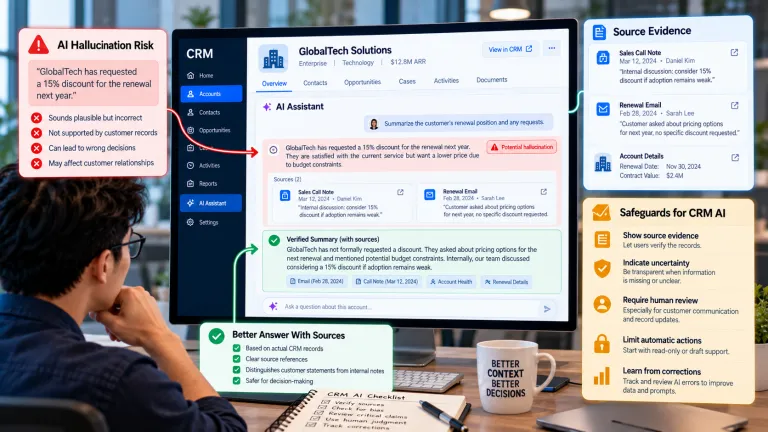
Salespeople need more than a number. Show why an opportunity is ranked highly or poorly: lack of recent engagement, missing stakeholder role, strong product usage, long stage duration, or similar signals. Explanations help sellers decide whether the model has captured real risk or is reacting to a data artifact.
Avoid turning explanations into rigid rules. A strategic deal can be healthy even when it differs from the pattern of typical wins.
Use Scores in Coaching, Not Only Ranking
Opportunity scoring can help managers identify deals worth discussing. A low score can prompt questions about evidence, next steps, stakeholders, or process gaps rather than automatically declaring the deal bad.
This coaching use case can be valuable even when the model is not accurate enough for automatic actions. It turns the score into a conversation starter grounded in patterns the team might otherwise overlook.
Monitor How Sales Behavior Changes
Once scores influence attention, they affect future data. Sellers may stop working low-scored deals, making those deals less likely to win and reinforcing the model. They may also learn which fields improve scores and enter optimistic data.
Watch for these feedback effects. Sample low-scored opportunities, review unexpected wins, and compare performance before and after scoring adoption to understand whether the system is improving decisions or merely reshaping behavior around the score.
A Practical Opportunity-Scoring Example
A company introduces an AI score that predicts win probability. Representatives quickly learn that opportunities with scheduled proposal meetings receive higher scores, so they create calendar events earlier than they previously would. Reported model confidence rises, but forecast accuracy does not improve.
The analytics team discovers that the meeting signal is partly a proxy for deals already close to decision and partly influenced by seller behavior. The company changes the model, evaluates stage-specific performance, and surfaces several evidence signals instead of emphasizing one score. Managers use the score to prioritize deal reviews, while final forecast judgment remains with the sales team.
How to Use an Opportunity Score
Use Good Practice Risky Practice
Prioritization Use scores to focus review on a manageable set of deals. Ignore all low-scored opportunities automatically.
Coaching Discuss the evidence behind unusual scores. Treat the number as proof that the seller is wrong.
Forecasting Combine score with stage evidence and manager judgment. Replace forecast process with a single model output.
Automation Automate low-risk reminders or review queues. Change pricing, ownership, or customer communication without validation.
Learning Analyze unexpected wins, losses, and overrides. Measure only overall model accuracy.
Common Mistakes to Avoid
Using a single score for every sales decision
Win probability, expected value, urgency, and strategic importance are distinct. One score should not silently stand in for all of them.
Training on inconsistent stages and outcomes
The model can reproduce CRM hygiene problems at scale. Audit labels and process changes before trusting historical patterns.
Allowing scores to become self-fulfilling
If low scores reduce seller attention, future outcomes may reinforce the model regardless of the opportunity’s original potential. Maintain exploration and review.
What to Do Next
Define exactly what the score predicts and which sales decision it should support.
Audit historical opportunity outcomes, stage definitions, and closed-date practices.
Remove or test for fields that may leak late-stage outcome information.
Provide users with leading evidence signals and a way to record disagreement.
Use a pilot to compare attention, progression, conversion, and forecast quality with a prior baseline.
Review unexpected wins and losses to detect blind spots and behavior changes.
Continue Reading on Clientira
Related Clientira guides provide additional context:
AI Data Readiness for CRM: How to Know Whether Your Customer Data Is Ready
AI Recommendation Systems in CRM: When Suggestions Help and When Humans Should Override Them
Frequently Asked Questions
What is AI opportunity scoring?
It is the use of machine-learning or advanced statistical methods to estimate an opportunity outcome or rank deals using patterns in CRM and related data.
Should opportunity scores replace sales forecasts?
Usually not. Scores can add evidence and consistency, but forecasts often require current context, strategic information, and commitments that may not be fully represented in historical data.
Why can an opportunity model look accurate but still be unhelpful?
It may rely on signals that occur too late, predict outcomes users already know, or rank deals without changing a useful decision. Evaluate lead time and operational value, not only predictive metrics.
How should sales reps override a score?
Allow them to record a concise reason such as new customer information, strategic context, incorrect data, or unusual deal structure. Analyze recurring override patterns rather than treating them as noncompliance.
Final Thoughts
AI opportunity scoring can help sales teams find patterns across more deals than any manager can review manually. Its best role is to sharpen attention and questions, not to create false certainty about a complex buying process.
Keep the score connected to evidence, test it at the moment decisions are made, and learn from disagreement. When sales judgment and model patterns inform each other, scoring becomes a useful CRM capability rather than another number competing for trust.