Types of CRM: Operational, Analytical, and Collaborative CRM
Customer Relationship Management (CRM) is not a single approach used in exactly the same way by every organization. Different businesses may use CRM technology for different purposes, such as managing daily customer activities, analyzing customer information, or improving coordination between teams. These different purposes are often described through three common types of CRM: operational CRM, analytical CRM, and collaborative CRM.
Understanding these types can make CRM easier to understand because each one emphasizes a different aspect of customer relationship management. Operational CRM focuses on the execution of customer-facing processes, analytical CRM focuses on turning customer data into useful insights, and collaborative CRM focuses on sharing relevant customer information across teams and communication channels. In practice, modern CRM environments may combine elements of all three rather than using only one approach.
What Are the Main Types of CRM?
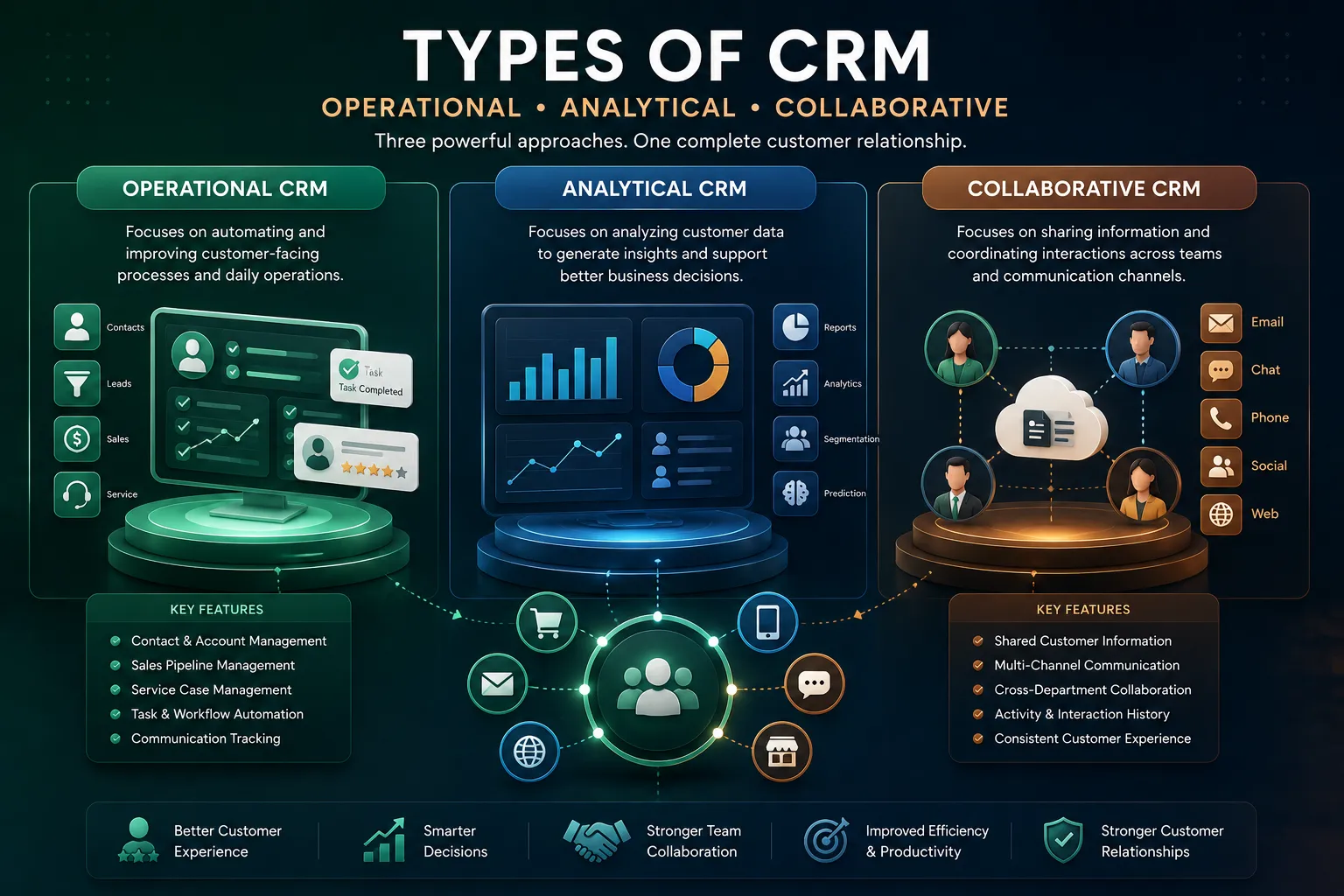
The three commonly discussed types of CRM are operational, analytical, and collaborative CRM. The distinction is mainly based on what the CRM environment is designed to help an organization accomplish. Operational CRM is concerned with day-to-day activities, analytical CRM is concerned with understanding data, and collaborative CRM is concerned with coordination and information sharing.
These categories are useful for learning because they show that CRM is broader than a contact database or sales tool. A CRM system can support employees who interact directly with customers, managers who analyze customer behavior, and teams that need to coordinate information across departments.
Before comparing the three types, it is useful to remember that CRM itself is a broader business approach. This beginner’s guide to CRM explains the basic concept of customer relationship management and how CRM systems organize customer information and interactions.
1. Operational CRM
Operational CRM focuses on the processes and activities involved in managing customer relationships on a day-to-day basis. It helps employees carry out tasks such as managing contacts, tracking leads, following up with customers, handling service cases, and organizing communication.
The main idea behind operational CRM is execution. Employees need practical tools that help them record interactions, manage workflows, and complete customer-related tasks. Instead of asking only what the organization knows about customers, operational CRM is concerned with what employees need to do with that information.
For example, a sales employee may use operational CRM to track a prospect through different stages of a sales process. A customer service employee may use it to receive and manage support cases. A marketing team may use CRM workflows to organize campaign-related activities and customer communication.
Common Features of Operational CRM
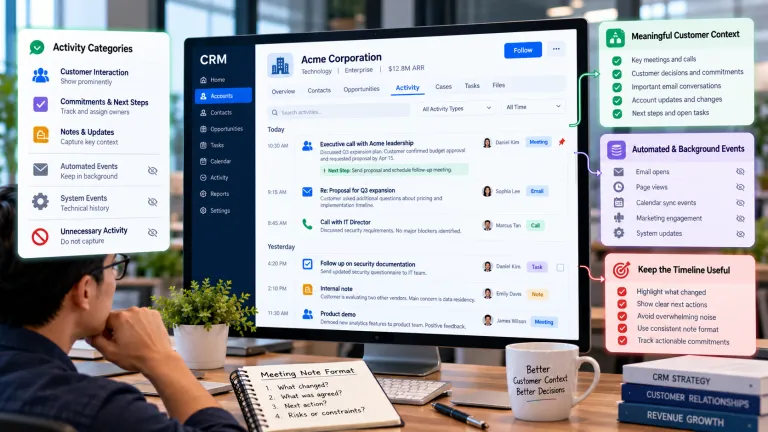
Operational CRM commonly includes contact management, lead management, opportunity tracking, sales pipelines, customer service workflows, task management, communication tracking, and automation. The exact features differ between systems, but they generally support repetitive customer-facing and administrative processes.
Workflow automation is especially relevant because many daily CRM activities involve routine actions. A system may create follow-up tasks, send notifications, assign cases, or update records after specific events occur. This can reduce manual work and improve consistency across customer-related processes.
Operational CRM therefore plays an important role in keeping customer-facing activities organized. It creates a structure that helps employees know what has happened, what is happening now, and what may need to happen next.
2. Analytical CRM
Analytical CRM has a different focus. Instead of primarily helping employees execute customer-related tasks, it focuses on analyzing customer information to identify patterns, trends, and insights. The purpose is to help organizations understand what customer data means and how that understanding can support decisions.
Analytical CRM can work with information such as purchase history, interaction records, service activity, customer segments, engagement patterns, and other relationship data. By analyzing this information, organizations may identify trends that are difficult to see when looking at individual customer records separately.
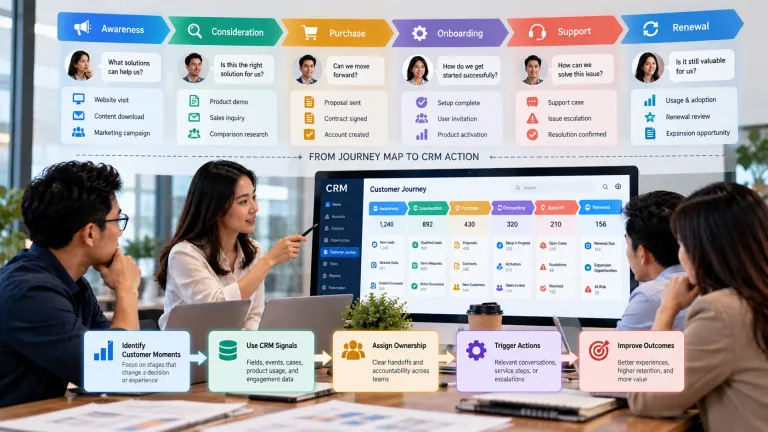
For example, a business may want to understand which customer groups show stronger engagement, which stages of a customer journey create more friction, or which types of interactions are associated with particular outcomes. Analytical CRM can help organize and examine this information.
Common Features of Analytical CRM
Analytical CRM commonly includes reporting, dashboards, customer segmentation, data analysis, performance monitoring, and trend identification. Some environments may also include predictive analytics and AI-supported analysis that can help identify more complex patterns within customer data.
This is where analytical CRM connects closely with the broader development of AI and data-driven customer management. Predictive analytics in CRM, for example, can help organizations use historical and current customer information to explore possible future behaviors or outcomes.
The quality of analytical CRM depends heavily on data quality. Inaccurate, incomplete, or inconsistent records can lead to misleading conclusions. Analytics is therefore most useful when customer data is maintained carefully and interpreted within the appropriate business context.
3. Collaborative CRM
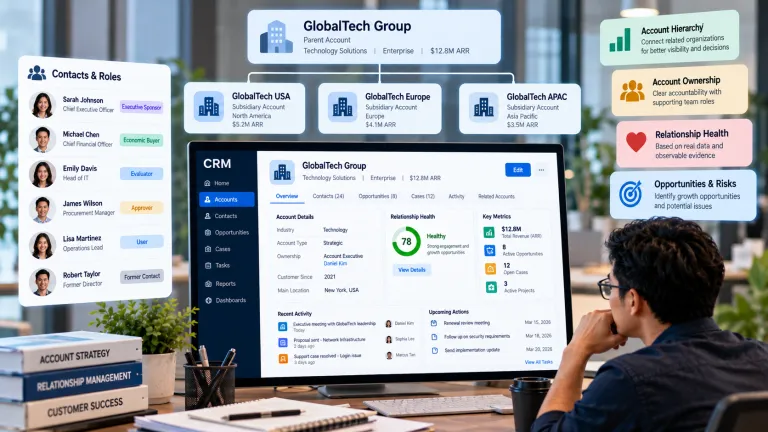
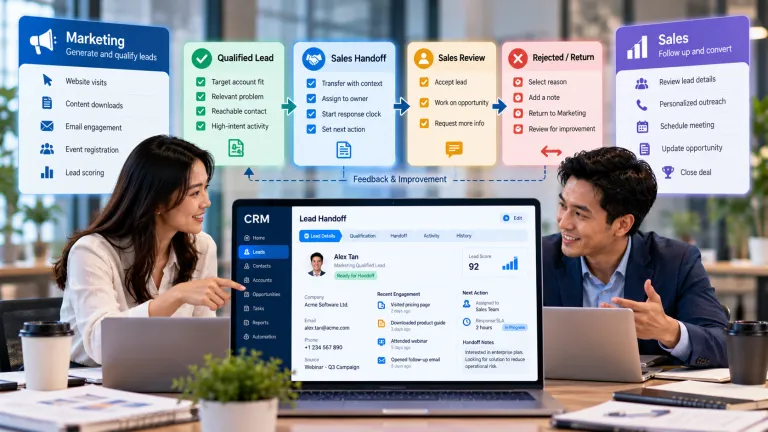
Collaborative CRM focuses on coordination and information sharing across teams, departments, and communication channels. Customer relationships often involve multiple parts of an organization, so employees need a way to share relevant information without forcing every team to maintain completely separate customer histories.
For example, marketing may interact with a customer before sales becomes involved. Later, customer service may handle a problem related to the same relationship. Without effective information sharing, each department may have only part of the story. Collaborative CRM aims to reduce these information gaps.
The main objective is not simply to give every employee access to every piece of data. Instead, the goal is to make relevant customer context available to the people who need it so they can coordinate their activities more effectively.
Common Features of Collaborative CRM
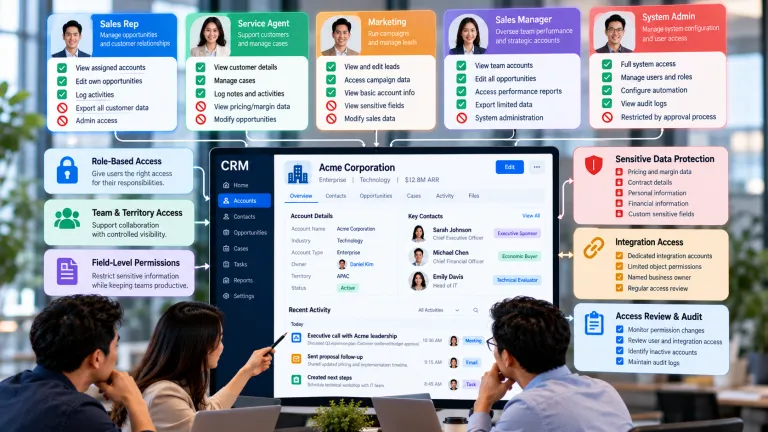
Collaborative CRM may involve shared customer records, communication history, team access, cross-department workflows, channel integration, and information-sharing processes. These capabilities can help organizations maintain continuity when customers move between departments or communication channels.
For instance, a customer may begin a conversation through a website, continue through email, and later contact customer service by phone. A collaborative CRM environment can help maintain a connected relationship history rather than treating every channel as a completely separate interaction.
This is one reason CRM can support broader customer experiences instead of focusing only on sales activity. As discussed in why CRM matters for modern business, customer relationships become more difficult to manage as interactions and touchpoints increase.
Operational vs. Analytical vs. Collaborative CRM
The three types of CRM differ mainly in their primary purpose. Operational CRM is focused on doing, analytical CRM is focused on understanding, and collaborative CRM is focused on sharing and coordinating. Looking at them this way provides a simple framework for understanding how each type contributes to customer relationship management.
Operational CRM helps employees manage daily processes and customer-facing activities. Analytical CRM helps managers and teams examine customer information to identify patterns and support decisions. Collaborative CRM helps different teams work from shared context and coordinate customer-related activities across organizational boundaries.
The distinction does not mean that these types must exist as completely separate systems. A modern CRM environment may include operational workflows, analytical dashboards, and collaborative communication capabilities within the same broader platform.
How the Three Types of CRM Work Together
The strongest CRM environments often combine operational, analytical, and collaborative capabilities. The three types can form a cycle in which customer information is collected through daily activities, analyzed for insight, and shared across teams to support better decisions and interactions.
Consider a customer service example. An operational CRM workflow records a customer’s support request and assigns it to an employee. The information from that interaction becomes part of the customer history. Analytical capabilities can then identify whether similar issues are appearing frequently. Collaborative capabilities can help share the findings with other departments that may need to respond.
This relationship creates a more complete CRM environment. Operational processes generate information, analytical processes help interpret it, and collaborative processes help distribute relevant context where it is needed.
How AI Is Changing These Types of CRM
Artificial Intelligence is increasingly influencing all three types of CRM. In operational CRM, AI can assist with tasks such as request classification, response suggestions, summaries, and workflow automation. In analytical CRM, AI can help identify patterns, generate insights, and support predictive analysis.
In collaborative CRM, AI can help summarize conversations, surface relevant customer context, and assist employees in finding information across large amounts of relationship data. This can make collaboration more efficient without requiring employees to manually review every record or conversation.
The broader relationship between AI and CRM is explored in how AI is transforming Customer Relationship Management. AI does not replace the underlying CRM categories; instead, it can add new capabilities to how organizations collect, interpret, and use customer information.
Which Type of CRM Is Best?
There is no single type of CRM that is automatically best for every organization. The right approach depends on the organization’s goals, processes, customer journey, team structure, and data needs.
An organization focused heavily on daily sales and service workflows may place greater emphasis on operational CRM. An organization with large amounts of customer data and a strong focus on decision-making may prioritize analytical CRM. A business with many departments, channels, or complex customer journeys may place greater importance on collaborative CRM.
In many cases, however, organizations do not need to choose only one. Combining the three approaches can create a more complete environment in which customer relationships are managed operationally, understood analytically, and coordinated collaboratively.
Why Understanding CRM Types Matters
Understanding CRM types helps organizations evaluate their customer management needs more clearly. Instead of asking whether a CRM system has a long list of features, organizations can ask what those features are actually helping employees accomplish.
This distinction is valuable because a CRM system should support real business processes rather than simply collect information. As explained in Key Components of a CRM System, CRM includes multiple connected components such as customer records, communication, service, analytics, automation, and data management.
Thinking in terms of operational, analytical, and collaborative CRM provides another way to organize these capabilities and understand how they contribute to the overall customer relationship strategy.
Conclusion
Operational, analytical, and collaborative CRM represent three important ways of understanding Customer Relationship Management. Operational CRM supports daily customer-facing processes, analytical CRM helps organizations understand customer data, and collaborative CRM improves information sharing and coordination across teams and channels.
These approaches are not necessarily alternatives. In a mature CRM environment, they can work together as parts of the same customer relationship strategy. Operational processes generate information, analytics turn that information into insight, and collaboration helps make relevant context available to the people who need it.
As AI and automation continue to develop, these CRM categories are becoming more connected and capable. Understanding the differences between them gives organizations and readers a clearer foundation for exploring how CRM technology can support better customer relationships, more informed decisions, and more coordinated business processes.