What Is CRM? A Complete Beginner’s Guide
Customer Relationship Management, commonly known as CRM, is a business approach used to organize, manage, and improve relationships with customers. A CRM system helps businesses keep customer information, interactions, communication, and other relevant details in a more organized way. Instead of relying on scattered spreadsheets, emails, notes, or disconnected applications, organizations can use CRM tools to create a more structured view of their customer relationships.
CRM has become an important part of modern business because customer interactions now happen across many different channels. A customer may communicate through email, social media, a website, messaging applications, phone calls, or in-person conversations. When this information is not properly organized, it becomes harder for businesses to understand customer needs and maintain consistent communication. CRM provides a framework for bringing these interactions together.
What Does CRM Mean?
CRM stands for Customer Relationship Management. The term refers both to a business strategy and to the technology used to support that strategy. At its core, CRM is about understanding customers, managing interactions with them, and using information to build stronger and more consistent relationships over time.
A CRM system typically stores information such as customer names, contact details, communication history, purchase records, preferences, and interactions with a business. Depending on the system, it may also include sales pipelines, customer service activities, marketing information, reporting tools, and automation features. The exact capabilities can vary, but the overall purpose remains the same: make customer information easier to manage and use.
CRM is therefore more than a digital address book. A well-designed CRM environment helps organizations turn customer information into useful context. When employees can see what has happened previously in a customer relationship, they can make better decisions and communicate with greater consistency.
Why Is CRM Important?
As businesses grow, managing customer relationships manually becomes increasingly difficult. A small business may be able to remember individual customers and keep information in a few spreadsheets, but this approach becomes less practical as the number of customers and interactions increases. Information can become duplicated, outdated, or difficult to find.
CRM helps address this problem by creating a more centralized approach to customer information. Instead of keeping customer details across multiple locations, teams can work with information stored in a structured system. This can make it easier to understand customer history, identify important interactions, and maintain continuity when different employees work with the same customer.
CRM can also support better customer experiences. When employees have access to relevant information, customers do not always need to repeat the same details every time they interact with a business. A representative can review previous conversations, understand the customer’s situation, and respond with more context.
How Does a CRM System Work?
A CRM system generally begins with collecting and organizing customer information. Data can come from different sources, including website forms, emails, sales conversations, customer support interactions, or other business processes. The information is then stored in a structured format that can be accessed by authorized users.
For example, imagine a customer contacts a company through a website and later speaks with a sales representative by phone. Without a centralized system, the information from these interactions may remain separated. With CRM, the interactions can be recorded as part of the same customer history, giving employees a more complete understanding of the relationship.
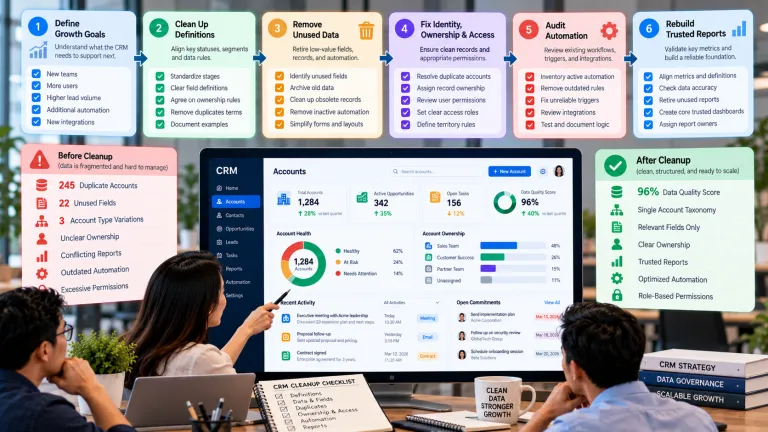
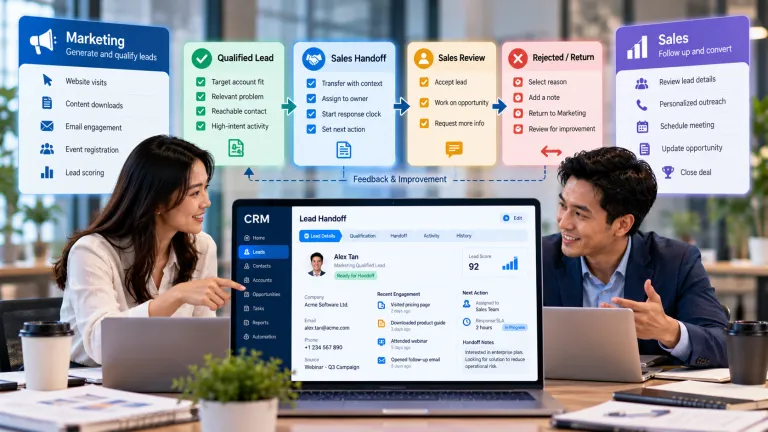
CRM systems can also help organize ongoing activities. A sales team might use a CRM to track prospects through different stages, while a customer service team may use it to manage support requests. Marketing teams can use customer information to understand audiences and create more relevant communication. These different activities can be connected through the same customer data environment.
Key Features of CRM Systems
Although CRM platforms differ in design and capabilities, several features appear commonly across modern systems. Understanding these features helps explain why CRM has become such an important part of customer relationship management and business operations.
Contact and Customer Management
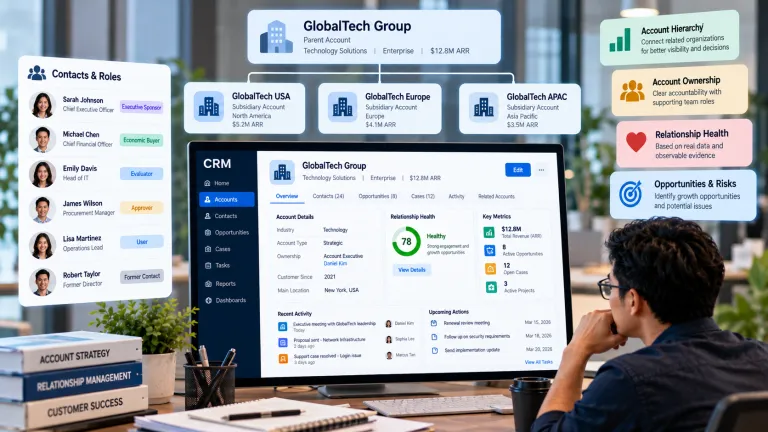
One of the fundamental functions of CRM is storing and organizing customer information. This may include names, contact details, company information, communication history, preferences, and other relevant records. Having this information in one structured environment can make it easier for teams to find and maintain customer data.
Interaction Tracking
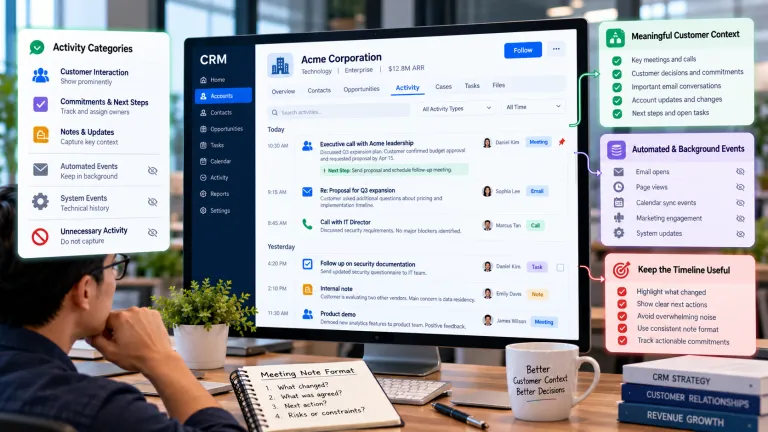
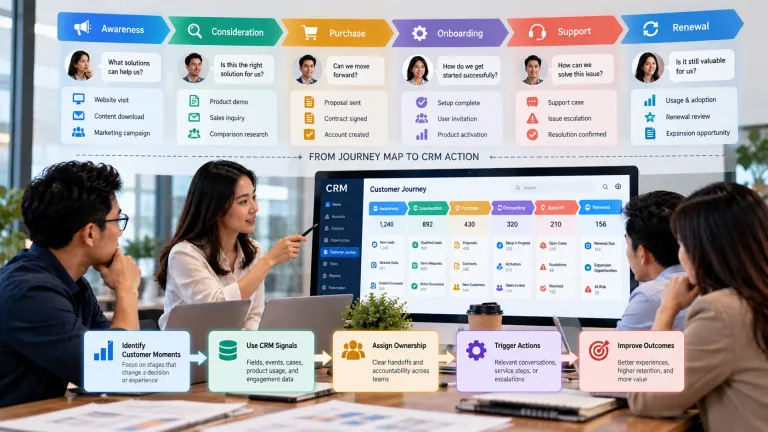
CRM systems can record interactions between customers and an organization. These interactions may include emails, calls, meetings, support requests, and other activities. A history of interactions provides context and can help employees understand what has already happened in a customer relationship.
Sales Pipeline Management
Many CRM systems include tools for managing potential customers as they move through a sales process. A business may organize prospects according to stages such as initial contact, qualification, proposal, negotiation, and completion. This gives teams a clearer picture of current opportunities and activities that require attention.
Reporting and Analytics
CRM platforms can also provide reports that help organizations understand customer-related activities. Reports may cover sales performance, customer engagement, pipeline activity, or service performance. When customer data is organized consistently, it becomes easier to identify patterns and support data-informed decisions.
Automation
Modern CRM systems may automate repetitive tasks such as sending reminders, assigning activities, updating records, or triggering communications. Automation can reduce manual work and allow employees to focus more time on activities that require judgment and personal interaction.
What Are the Benefits of CRM?
CRM can provide several benefits when it is implemented effectively. One important advantage is better access to customer information. Employees can spend less time searching through different systems and more time using relevant information to support their work.
Another benefit is improved communication. When customer interactions are documented consistently, teams can provide more coordinated responses. This becomes particularly important when multiple departments interact with the same customers.
CRM can also support customer retention and long-term relationships by helping organizations understand customer history and preferences. Better information can make it easier to recognize customer needs, identify opportunities for follow-up, and deliver more relevant experiences.
Operational efficiency is another potential benefit. Automation and centralized information can reduce repetitive administrative tasks, although the actual results depend on how well the CRM system is designed, implemented, and maintained.
CRM vs. Traditional Customer Management
Traditional customer management often depends on a combination of spreadsheets, email inboxes, documents, and individual employee knowledge. These methods can work for smaller operations, but they become harder to manage as customer interactions increase.
CRM introduces a more structured approach by organizing customer information and activities within a shared system. Instead of relying heavily on individual memory or disconnected files, organizations can create a more consistent record of customer relationships.
The difference is not simply about using newer technology. The larger change is the ability to treat customer information as an organized business resource that can support communication, analysis, and decision-making.
Who Can Use CRM?
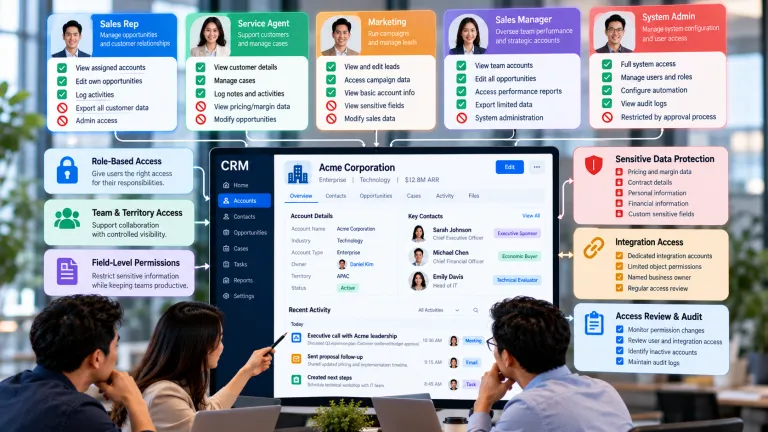
CRM is often associated with sales teams, but its applications can extend across many parts of an organization. Customer service teams can use CRM to understand support history, marketing teams can use customer information to better understand audiences, and managers can use reports to monitor customer-related activities.
Small businesses can also benefit from CRM concepts, although their needs may be different from those of larger organizations. Some may only need basic contact management and interaction tracking, while larger organizations may require advanced automation, analytics, integrations, and more complex workflows.
The important factor is not simply whether a business uses CRM technology, but whether the system matches the organization’s actual processes and customer relationship needs.
Conclusion
CRM is a structured approach to managing customer relationships through organized information, consistent interactions, and technology-supported processes. It helps businesses understand customers more effectively by bringing relevant information and activities into a more accessible environment.
For beginners, the most important idea to understand is that CRM is not just a software category. It represents a way of managing customer relationships more systematically. Technology provides the tools, but the real value comes from how organizations use customer information to improve communication, support better decisions, and create more consistent experiences.
As CRM continues to evolve, newer technologies such as artificial intelligence and automation are expanding what customer relationship systems can do. Understanding the fundamentals of CRM therefore provides an important foundation for exploring how AI is changing customer relationships and modern business practices.
“`